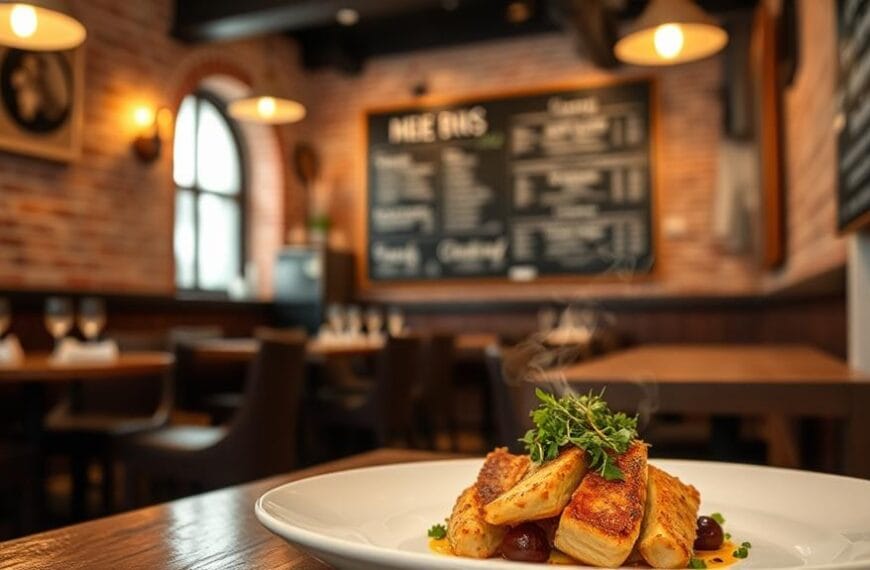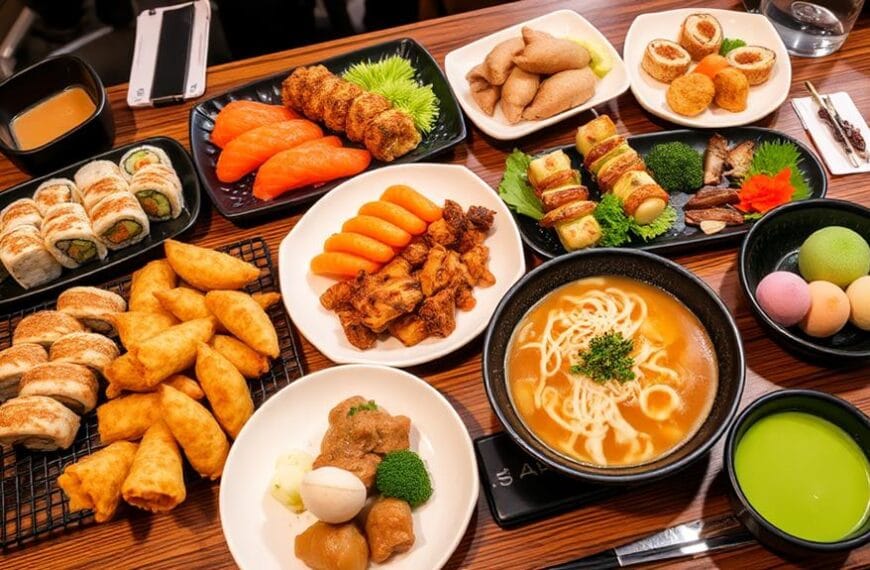
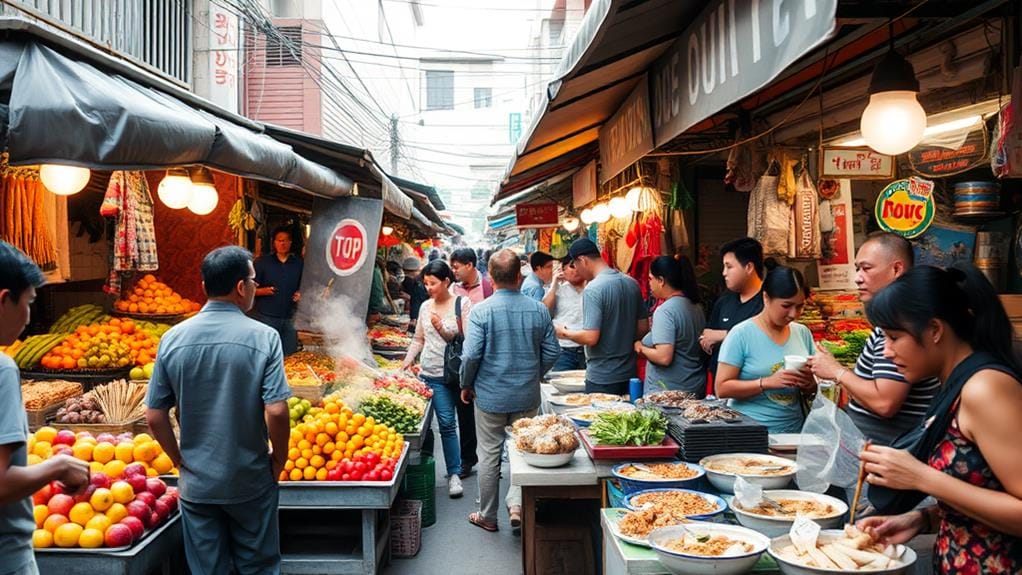

When exploring Southeast Asia, your taste buds are in for a treat! Cambodia’s Amok, a fragrant curry, will transport you to flavor heaven. In Laos, don’t miss Larb with sticky rice, a perfect blend of tangy and savory. Myanmar’s Mohinga, a hearty fish soup, is a must-try breakfast. Thailand’s Pad Thai needs no introduction, while Indonesia’s Nasi Goreng will satisfy your fried rice cravings. Vietnam’s Pho is comfort in a bowl, and Sate skewers are a grilled delight across the region. For the full experience, hit the streets and sample the vibrant local fare. Your culinary adventure is just beginning!
Key Takeaways
- Try Cambodia’s Amok, a flavorful curry steamed in banana leaves with coconut and aromatic spices.
- Sample Laos’ Larb and Sticky Rice, showcasing the country’s communal dining culture and regional flavors.
- Taste Myanmar’s Mohinga, a national dish featuring rice noodles in catfish-based broth with crispy fritters.
- Experience Thailand’s Pad Thai, an iconic stir-fried noodle dish balancing sweet, tangy, and savory flavors.
- Enjoy Indonesia’s Nasi Goreng, a flavorful fried rice dish, or Vietnam’s Pho, a customizable noodle soup.
Amok: Cambodia’s Signature Dish
Curiosity often leads food enthusiasts to explore the culinary treasures of Southeast Asia, and Cambodia’s signature dish, Amok, is a must-try for any adventurous palate. This flavorful curry, bursting with coconut goodness and aromatic spices, will transport you to the heart of Cambodian cuisine. You’ll love how it’s traditionally steamed in banana leaves, adding a touch of exotic flair to your dining experience. Whether you’re savoring the classic fish version or opting for chicken or tofu, Amok’s sweet and tart flavors will dance on your taste buds. Don’t forget to pair it with a side of fluffy rice to soak up every last drop of that delicious sauce! As you indulge, you’ll appreciate how Amok beautifully blends traditional elements with regional influences, making it a true culinary adventure. Trust me, your taste buds will thank you!
Larb and Sticky Rice
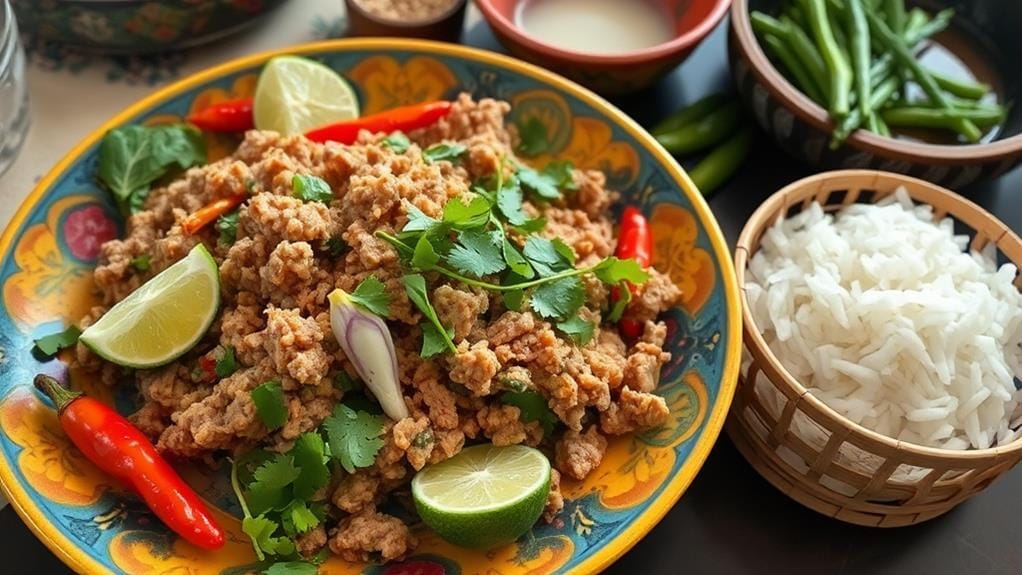
You’ll love discovering Laos’s unofficial national dish, larb, a flavorful minced meat salad that’s often paired with sticky rice. As you explore this culinary delight, you’ll find that the ingredients and preparation methods can vary by region, reflecting local traditions and tastes. When you sit down to enjoy larb with friends and family, you’re not just savoring a delicious meal, but also participating in an important aspect of Laotian culture that emphasizes sharing and community.
Laotian National Dish
When it comes to Laotian cuisine, two dishes stand out as the unofficial national favorites: larb and sticky rice. You’ll find these culinary gems at the heart of every gathering, from family dinners to festive celebrations. Larb, a zesty minced meat salad bursting with fresh herbs and tangy fish sauce, is the star of the show. It’s like a flavor explosion in your mouth! Pair it with sticky rice, served in cute woven baskets, and you’ve got the perfect combo for a hands-on eating experience.
| Region | Larb Variation | Key Ingredient |
|---|---|---|
| North | Pork | Roasted rice |
| Central | Chicken | Mint leaves |
| South | Beef | Lemongrass |
Don’t be shy – dig in and embrace the communal spirit of Laotian cuisine. It’s all about sharing good food and even better company!
Ingredients and Preparation
The two key components of Laos’ beloved dish require distinct preparation methods. For larb, you’ll need to finely mince your choice of meat and mix it with zesty lime juice, pungent fish sauce, and a handful of fresh herbs. Don’t forget the toasted rice powder – it’s the secret to that addictive nutty crunch!
As for sticky rice, you’re in for a treat. This glutinous wonder is steamed to perfection, becoming delightfully chewy and ready to be molded into bite-sized balls. Here’s why you’ll love making larb and sticky rice:
- It’s a hands-on experience – no utensils needed!
- You can customize the spice level to your liking
- The fresh ingredients make you feel alive and vibrant
- It’s a taste of true Laotian freedom on a plate
Cultural Significance
In the heart of Laotian culture, larb and sticky rice stand as more than just culinary delights. They’re the essence of communal dining, bringing people together in a dance of flavors and textures. You’ll find these dishes at the center of important ceremonies, where they symbolize friendship and unity. As you dig into a plate of larb, savoring its tangy, spicy notes, you’re not just eating – you’re participating in centuries of tradition. And when you scoop up that sticky rice with your hands, you’re embracing the freedom of Laotian dining customs. The combination of larb and sticky rice isn’t just about taste; it’s a reflection of the region’s agricultural practices and the ingenuity of its people. So next time you’re in Laos, don’t just eat – immerse yourself in the cultural significance of these beloved dishes.
Myanmar’s Beloved Mohinga
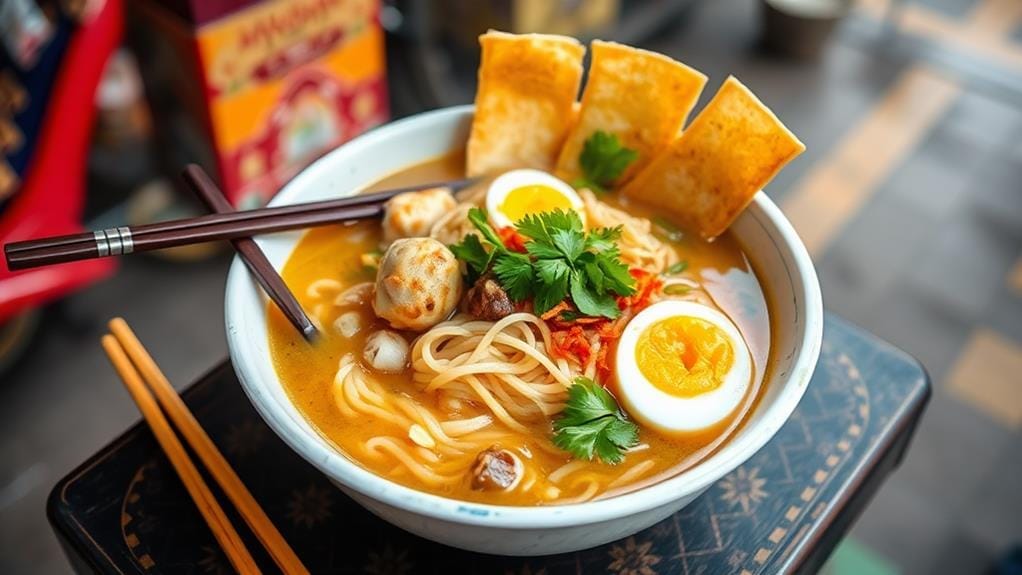
As you explore Myanmar’s culinary landscape, you’ll quickly discover the beloved national dish known as Mohinga. This Southeast Asian gem is a perfect blend of flavors and textures, featuring rice noodles in a catfish-based broth. It’s not just breakfast; locals enjoy it all day! You’ll love the mix of:
- Crispy fritters
- Boiled eggs
- Fresh herbs
- Unique spices like lemongrass
Each region adds its own twist, making Mohinga a tribute to Myanmar’s diverse culinary traditions. It’s the best food to experience the country’s communal dining culture. Don’t be surprised if you find yourself craving it long after your trip! Whether you’re slurping it from a street vendor or in a fancy restaurant, Mohinga’s comforting embrace will make you feel like a true local.
Pad Thai: Thailand’s Famous Noodles
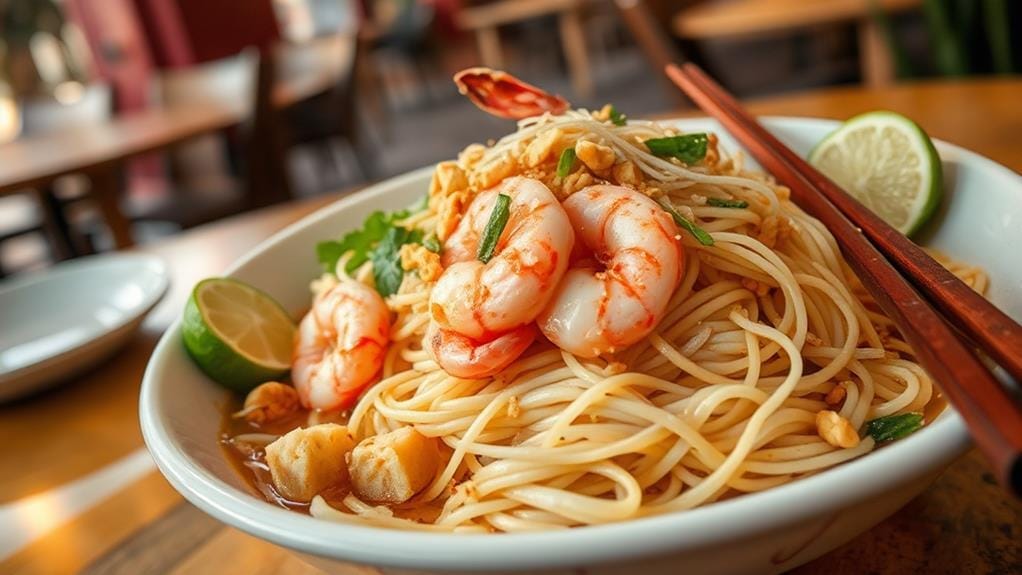
When you think of Thailand, you can’t help but picture a steaming plate of Pad Thai, those tangy, sweet, and savory noodles that’ve won hearts worldwide. You might be surprised to learn that this iconic dish has roots in a World War II campaign to boost Thai nationalism and cut rice consumption. As you dig into the layers of flavors, you’ll discover a masterful blend of tamarind, palm sugar, and fish sauce, all working together to create that unforgettable taste that’s made Pad Thai a global sensation.
Origins and Cultural Significance
During the mid-20th century, Pad Thai emerged as Thailand’s national dish, thanks to Prime Minister Luang Phibunsongkhram’s nationalistic campaign. This culinary icon, with roots in Chinese cuisine, evolved to become a symbol of Thai food culture and identity. When you’re exploring Southeast Asian flavors, Pad Thai’s a must-try that’ll tantalize your taste buds with its perfect balance of:
- Sweet palm sugar
- Tangy tamarind
- Savory fish sauce
- Umami-rich dried shrimp
You’ll love how the stir-fried rice noodles dance with fresh ingredients like bean sprouts, crushed peanuts, and a squeeze of lime. It’s not just a meal; it’s a journey through Thailand’s culinary innovation and adaptability. So, when you’re craving freedom on a plate, Pad Thai’s your ticket to a flavor revolution!
Key Ingredients Breakdown
Now that you’ve got a taste of Pad Thai’s cultural significance, let’s break down the key ingredients that make this dish a flavor powerhouse. You’ll find a perfect balance of sweet, sour, salty, and umami in every bite. Check out this breakdown of the star players:
| Ingredient | Role |
|---|---|
| Rice noodles | Chewy base, Chinese-inspired |
| Tamarind paste | Tangy kick, balances sweetness |
| Fish sauce | Umami punch, depth of flavor |
| Dried shrimp | Seafood essence, flavor enhancer |
| Peanuts | Crunchy topping, nutty contrast |
Don’t forget the palm sugar, which adds that irresistible sweetness. As you dig into your Pad Thai, you’re not just eating noodles – you’re tasting the freedom of culinary exploration and the rich tapestry of Southeast Asian flavors.
Cooking Techniques Explained
Ready to plunge into the art of making Pad Thai? This iconic Thai dish is all about mastering the high-heat stir-frying technique. You’ll want to grab your wok and crank up the heat to get that perfect smoky flavor. The key to nailing this dish lies in these cooking techniques:
- Quick-frying soaked rice noodles
- Stir-frying proteins and veggies at high heat
- Balancing the sauce with tamarind, fish sauce, and palm sugar
- Tossing in fresh garnishes just before serving
As you’re frying up those noodles, remember it’s all about timing and temperature. The sauce should coat everything evenly, creating that irresistible tangy-sweet flavor. Don’t forget to add those fresh vegetables and crushed peanuts at the end for that perfect crunch. With these techniques, you’ll be serving up freedom on a plate in no time!
Indonesian Nasi Goreng
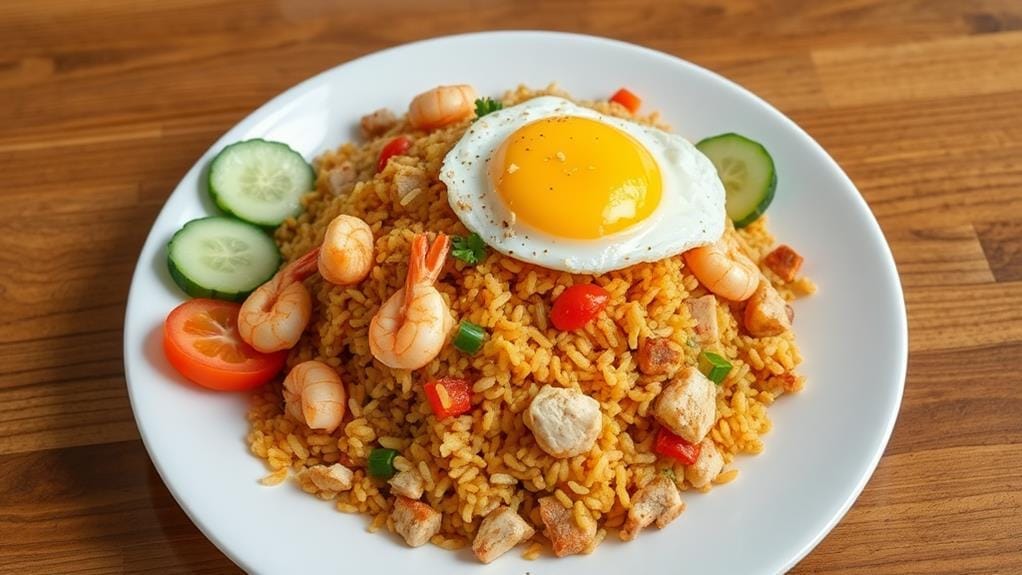
Nasi Goreng, Indonesia’s beloved national dish, stands out as a flavorful powerhouse in Southeast Asian cuisine. You’ll fall in love with this fried rice creation, bursting with shrimp paste, sweet soy sauce, and your choice of protein. It’s a dish that screams freedom – no two versions are exactly alike! Topped with a sunny-side-up fried egg, it’s a feast for your eyes and taste buds. As you travel through Indonesia, you’ll discover over 100 variations, each reflecting local preferences and culinary heritage. From turmeric-infused golden rice to spicy seafood medleys, Nasi Goreng adapts to every palate. Don’t forget to try the crunchy prawn crackers on the side – they’re addictive! This iconic dish has conquered hearts worldwide, proving that Indonesian cuisine is a force to be reckoned with.
Vietnamese Pho
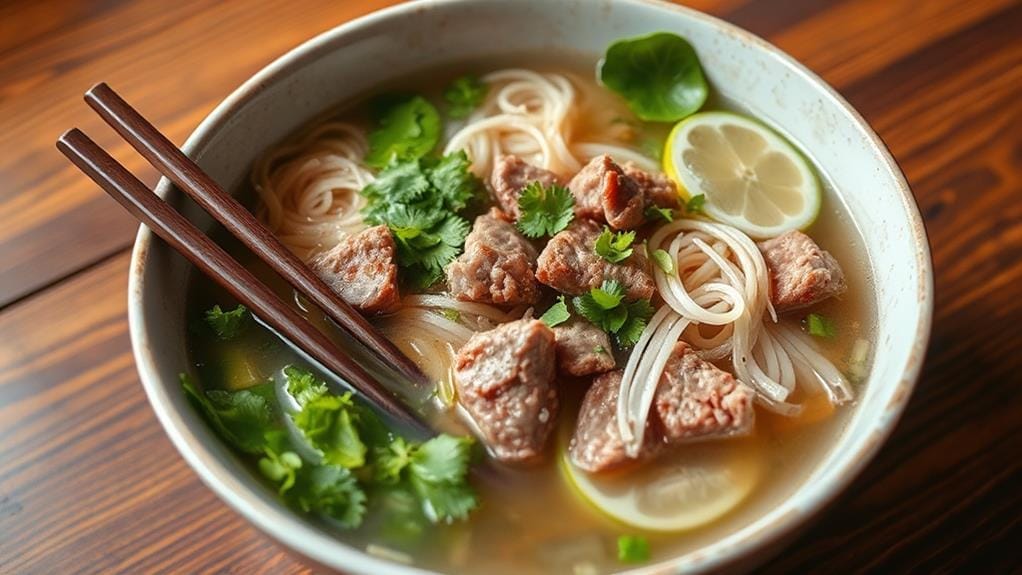
Steaming bowls of pho have taken the culinary world by storm, and it’s easy to see why. This Vietnamese noodle soup is a flavor explosion that’ll have you hooked from the first slurp. Whether you’re in Hanoi or Ho Chi Minh City, you’ll find locals and tourists alike diving into this comforting dish.
Here’s why pho’s a must-try when you’re in Vietnam:
- The broth’s simmered for hours with aromatic spices
- You can customize it with fresh herbs and lime
- It’s perfect for any time of day, not just breakfast
- There are two styles to choose from: Pho Bac and Pho Nam
Don’t be shy – grab those chopsticks and spoon, and get ready to set out on a flavor journey. Dip, slurp, and savor your way through this Vietnamese classic. It’s freedom in a bowl!
Sate: Grilled Skewers Delight
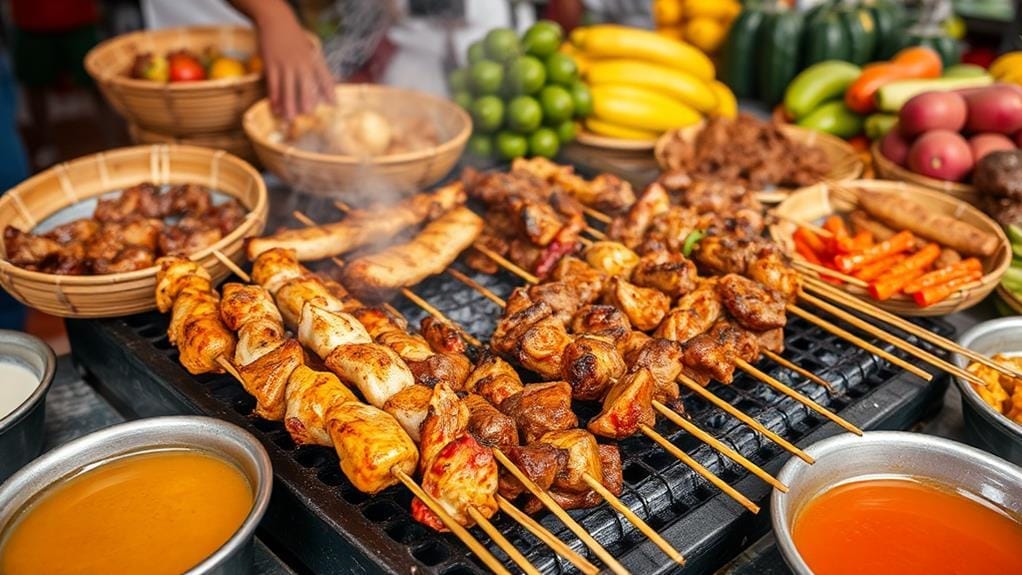
Sizzling and fragrant, sate skewers are a mouthwatering staple of Southeast Asian street food. You’ll find these grilled delights in Indonesia, Malaysia, and Singapore, tempting you with their irresistible aroma. Sink your teeth into juicy chicken, beef, or pork, marinated in turmeric and spices that’ll transport your taste buds to flavor heaven. Don’t forget to dunk your skewer in the rich, creamy peanut sauce – it’s a game-changer!
In Indonesia, you’re in for a treat with regional varieties like Sate Madura’s sweet soy marinade or Sate Padang’s spicy kick. Grab a side of rice or rice cakes, and you’ve got yourself the perfect street food feast. Trust me, once you’ve tried sate, you’ll be hooked on this freedom-loving, flavor-packed adventure. It’s not just food; it’s a delicious journey through Southeast Asian culinary culture.
Exploring Southeast Asian Street Food
While sate skewers are a definite must-try, they’re just the tip of the iceberg when it comes to Southeast Asian street food. You’ll find an explosion of flavors waiting to tantalize your taste buds at every corner. From the classic Thai Pad Thai to Vietnam’s Bánh Mì, the best street food is often served with sticky rice or as part of delicious noodle dishes.
Here’s why you should immerse yourself in the street food scene:
- It’s affordable and packed with flavor
- Dishes are prepared fresh before your eyes
- You’ll support local economies
- It’s a great way to experience authentic local culture
Don’t miss out on tropical fruits like mango sticky rice or fried rice variations that’ll make your mouth water. Trust me, your taste buds will thank you for this culinary adventure!
Frequently Asked Questions
What Is the Most Popular Food in Southeast Asia?
Picture bustling streets filled with sizzling woks and fragrant aromas. You’ll find it hard to pinpoint one “most popular” food in Southeast Asia. Instead, immerse yourself in a mosaic of regional specialties, traditional recipes, and favorite snacks at vibrant food festivals.
What Is the Staple Food of Southeast Asia?
You’ll find rice is the staple food of Southeast Asia. Explore diverse rice varieties, from jasmine to sticky rice. Immerse yourself in street food scenes, regional spices, and food festivals to experience the vibrant culinary traditions and traditional recipes.
What Are Some Local Foods in Eastern Asia?
Did you know that China alone has over 30,000 street food vendors? Eastern Asia’s culinary traditions are a feast for the senses. You’ll find regional specialties bursting with unique flavor profiles, from steaming dumplings to sizzling Korean barbecue at bustling food markets.
What Food Is Popular in Southwest Asia?
You’ll love Southwest Asia’s culinary freedom! Indulge in spicy kebabs, fragrant curries, and aromatic rice. Savor fresh seafood, savory pastries, and grilled meats. Don’t miss out on the region’s diverse flavors that’ll tantalize your taste buds.


 By
By