
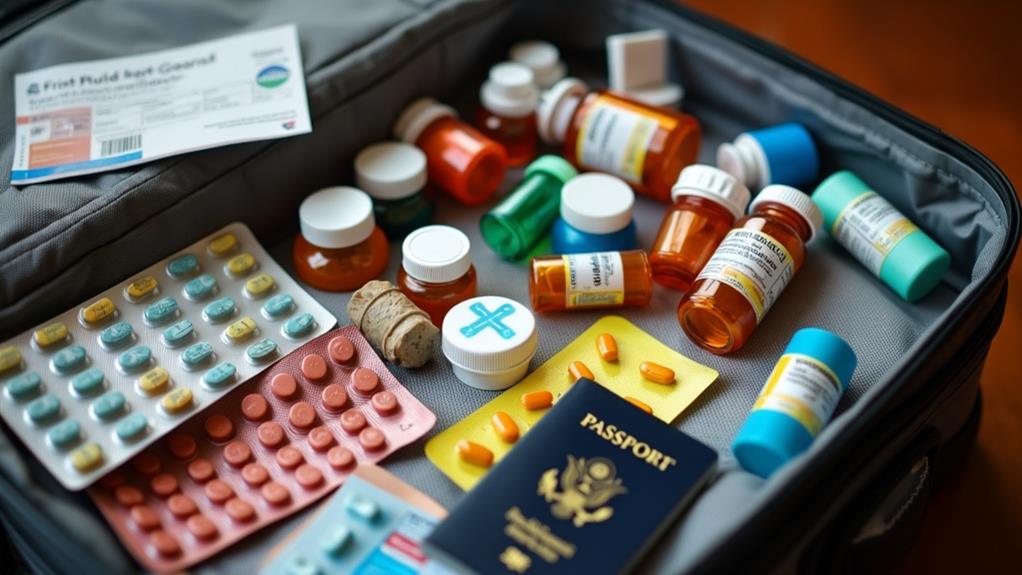

When packing for your next adventure, don’t forget your travel medicine kit! Essential medications include pain relievers like ibuprofen, allergy meds such as antihistamines, and digestive aids like anti-diarrheal tablets. Throw in some motion sickness pills if you’re prone to queasiness, and pack any prescription meds you take regularly. Don’t overlook topical treatments like hydrocortisone cream for pesky bug bites or sunburn relief. Sleep aids can be a lifesaver for jet lag, while altitude sickness meds are vital for mountain treks. And if you’re headed to a tropical paradise, antimalarial drugs might be necessary. Prepare wisely, and you’ll be ready for whatever your journey throws your way!
Key Takeaways
- Pack pain relief medications like ibuprofen and acetaminophen for headaches and general discomfort.
- Include allergy and cold remedies such as antihistamines, decongestants, and cough suppressants.
- Bring digestive health aids like anti-diarrheal medications, stomach remedies, and electrolyte solutions.
- Carry prescription medications in their original containers, along with a list of dosages and doctor’s information.
- Include first aid essentials like bandages, antiseptic wipes, and topical treatments for minor injuries and skin issues.
Pain Relief Medications
Pain relief medications are an essential component of any traveler’s medical kit. Whether you’re hiking through rugged terrain or exploring bustling cities, headaches and muscle aches can strike at any moment. That’s why packing over-the-counter pain relievers like ibuprofen and acetaminophen is vital for your travel health kit. Trust me, you’ll thank yourself later!
Remember to bring enough for your entire trip, plus a few extra days – you never know when delays might pop up. Keep those meds in their original packaging to avoid any hassles with local regulations.
And hey, while it might be tempting to pop an extra pill when that post-adventure soreness kicks in, stick to the recommended dosage. Your body will thank you!
Before jetting off, double-check local rules about importing medications, especially for international trips. Freedom to explore is great, but staying pain-free is even better!
Allergy and Cold Remedies
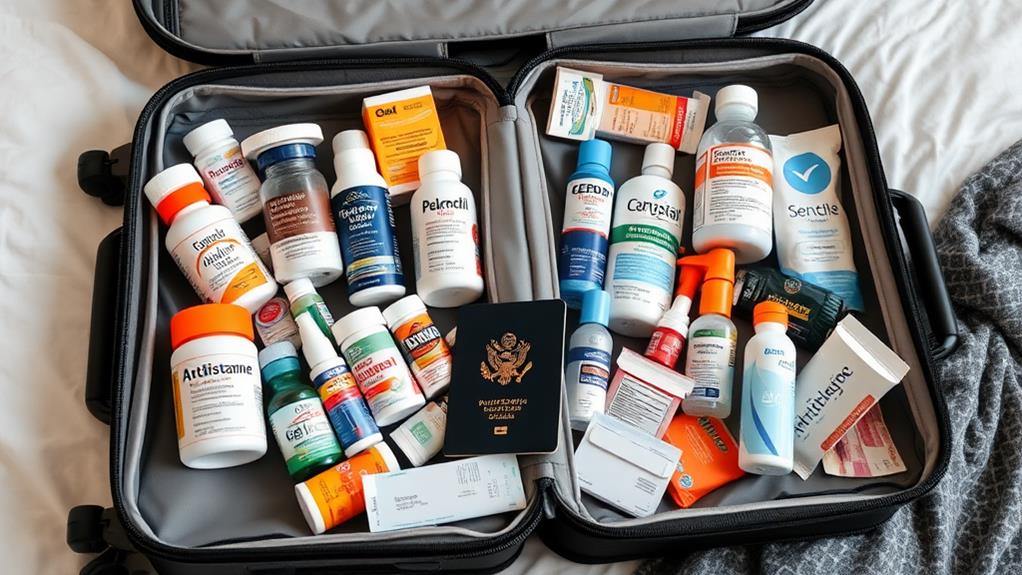
When it comes to allergy and cold remedies for travel, antihistamines are your first line of defense against sneezing and itching.
Don’t forget to pack decongestants and nasal sprays to combat stuffy noses, but remember to check local regulations as some countries restrict certain medications.
Cough suppressants and throat lozenges can be lifesavers when you’re trying to enjoy your trip despite a pesky cold, so toss a few in your bag just in case.
Essential Antihistamine Options
Travelers should prioritize packing essential antihistamines to manage potential allergy symptoms and cold-related discomfort during their journey.
Trust me, there’s nothing worse than being stuck in a foreign city with a runny nose and itchy eyes!
Pack both first-generation antihistamines like Benadryl for those nights when you need some shut-eye, and non-drowsy options like Claritin for daytime adventures.
Don’t forget about Sudafed for congestion and Robitussin for that pesky cough – they’re lifesavers when you’re trying to enjoy your trip.
Oh, and if you’re prone to motion sickness, toss in some Bonine to keep nausea at bay.
Just remember, always chat with your doc before hitting the road to make sure your antihistamines play nice with your other prescription medications.
Happy travels, allergy-free!
Decongestants and Nasal Sprays
For effective management of nasal congestion and allergy symptoms while traveling, decongestants and nasal sprays are essential additions to your medical kit.
These handy remedies can be lifesavers when you’re exploring new destinations and don’t want a stuffy nose to slow you down. Decongestants like pseudoephedrine work wonders by narrowing those pesky blood vessels in your nasal passages, giving you the freedom to breathe easy.
For quick relief, nasal sprays like oxymetazoline are your go-to buddies, but remember – don’t use them for more than three days, or you might end up with a rebound congestion that’ll cramp your style.
If allergies are your nemesis, antihistamine nasal sprays can be your secret weapon.
Just a heads up, though – always check with your doc before packing these prescription medications, especially if you’ve got high blood pressure or heart issues.
Cough Suppressants Considerations
Cough suppressants are invaluable allies for travelers combating the discomfort of dry coughs associated with allergies and colds. When packing your travel meds, don’t forget these lifesavers!
Look for dextromethorphan, a rock star at quieting those pesky coughs. But hey, if you’re sensitive to alcohol, steer clear of suppressants containing it. Nobody wants to feel like they’re on a booze cruise when they’re just trying to breathe easy!
For an extra punch, combine suppressants with expectorants like guaifenesin. It’s like tag-teaming your cough – one quiets it down, the other kicks out the gunk.
Always check for interactions with other meds, though. You don’t need to see double vision on your vacation!
And remember, some countries might give you the side-eye for certain ingredients, so do your homework before jetting off with prescription medication.
Digestive Health Aids
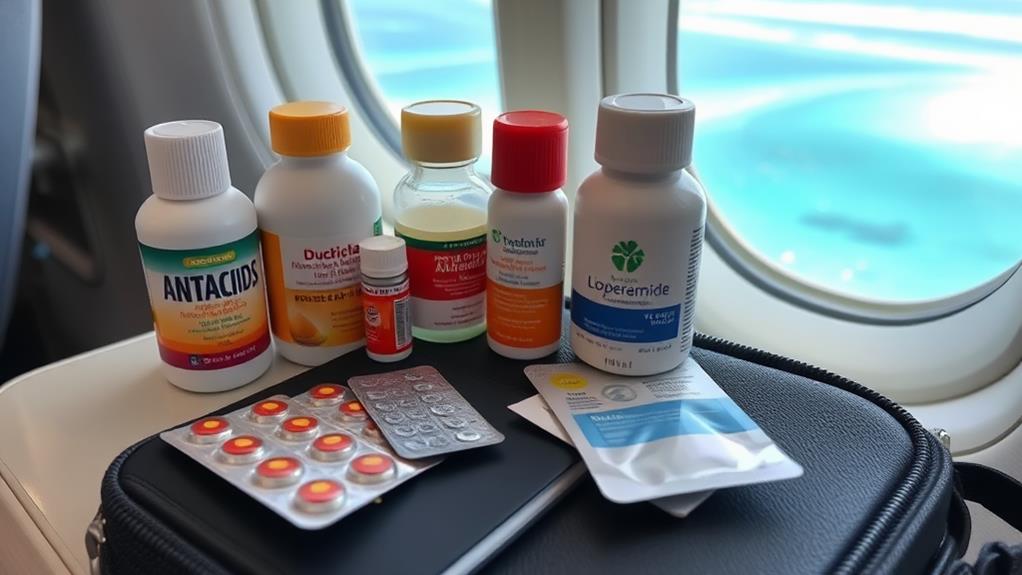
When it comes to digestive health aids for travel, packing the essentials can save you from uncomfortable situations and ruined itineraries.
Anti-diarrheal medications like Imodium are a must-have, offering quick relief when you’re caught off guard by unfamiliar cuisines or tap water.
For those inevitable bouts of stomach discomfort, remedies such as Tums, Pepto-Bismol, or GasX can be lifesavers, helping you bounce back and enjoy your trip without missing a beat.
Essential Anti-Diarrheal Medications
Digestive issues can quickly derail a travel experience, making anti-diarrheal medications essential for any traveler’s health kit.
Imagine this: you’re exploring a vibrant local market, sampling exotic street food, when suddenly your stomach rebels. That’s where Imodium and Pepto-Bismol swoop in to save the day! These trusty sidekicks slow down your gut’s sprint and soothe your queasy tummy.
But wait, there’s more! Toss some probiotics into the mix, and you’ve got a digestive dream team.
Before you jet off, though, chat with your healthcare provider about the right doses for your adventure. They’ll confirm you’re not caught off guard by any unexpected tummy troubles.
With these mighty meds in your arsenal, you’ll be free to savor every delicious moment of your journey without fear!
Stomach Discomfort Remedies
Prepared for potential digestive disruptions, savvy travelers pack a diverse array of stomach discomfort remedies.
You’ll want to stuff your bag with Tums or Pepto-Bismol – they’re lifesavers when that exotic street food decides to rebel.
Don’t forget the gentle laxatives like Miralax; nothing ruins a beach day quite like feeling backed up.
And probiotics? They’re your gut’s best friend when you’re globetrotting.
Trust me, I’ve learned the hard way that having enough medications can make or break a trip.
Electrolyte solutions are another must-have; they’ll keep you hydrated when your stomach’s doing somersaults.
Remember, your digestive system is in for a wild ride when you travel, so arm yourself with these remedies.
You’ll thank yourself later when you’re not stuck in the hotel bathroom!
Motion Sickness Treatments
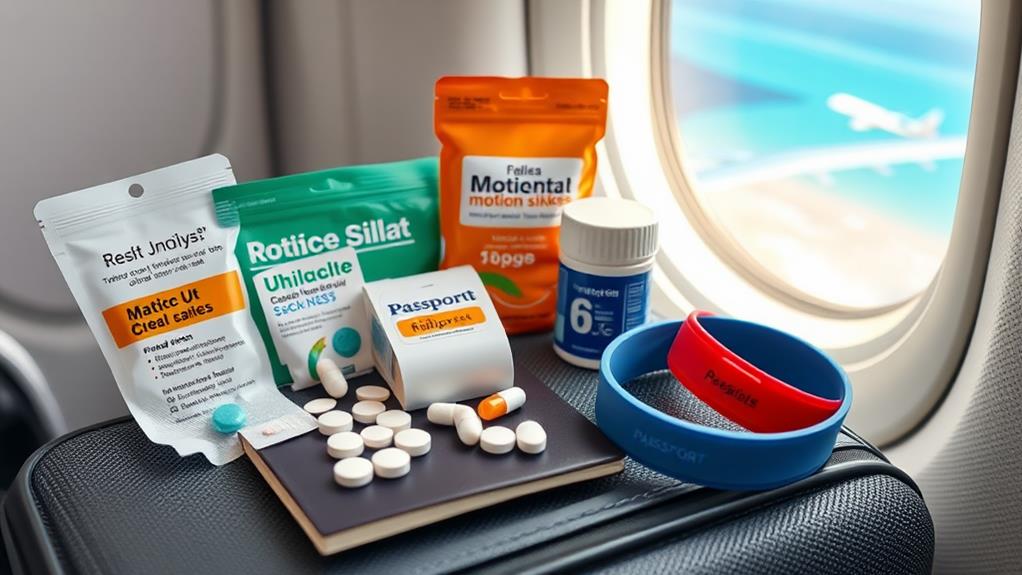
Combating motion sickness effectively can make the difference between an enjoyable journey and a miserable travel experience.
Whether you’re prone to queasiness on boats, planes, or winding roads, there’s a solution out there for you. Over-the-counter motion sickness medicine like Dramamine or Bonine can be lifesavers, knocking out nausea and dizziness before they ruin your trip.
For those with more severe cases, prescription medicines like scopolamine patches offer extended relief. Don’t forget to pack these meds and take them 30-60 minutes before you set off!
If you’re looking for a natural approach, ginger’s your friend – pop a few capsules or sip some tea.
And here’s a pro tip: combine your chosen remedy with smart seating choices and horizon-gazing for the ultimate defense against motion sickness.
Happy travels, adventure seekers!
Recommended Products

【Relief for Nausea and Vomiting】:EmeTerm Explore Classic anti-nausea wristband helps relieve nausea, retching, and vomiting caused by motion sickness from car rides, flights, cruises, and VR gaming, as well as morning sickness during pregnancy. It provides safe, drug-free relief without drowsiness, making it suitable for travel and daily use.

Prescription Medications
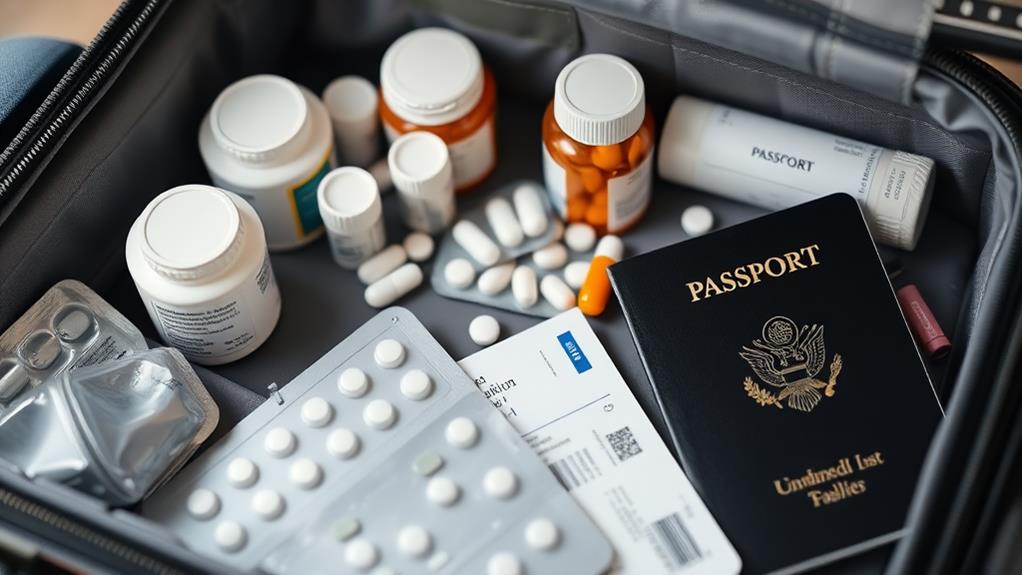
Three critical steps are essential when preparing prescription medications for travel.
First, verify you have enough medicine for your entire trip, plus extra in case of delays.
Second, keep all prescriptions in their original, labeled containers.
Third, maintain a detailed list of your medications, including dosages and your doctor’s contact info.
For those seeking the freedom to explore without worry, here’s a quick checklist to ease your mind:
- Pack a 30-day supply of your prescription meds
- Store pills in their original bottles to avoid hassles
- Carry a list of your medicines and dosages
- Consult your doc 4-6 weeks before jetting off
First Aid Essentials
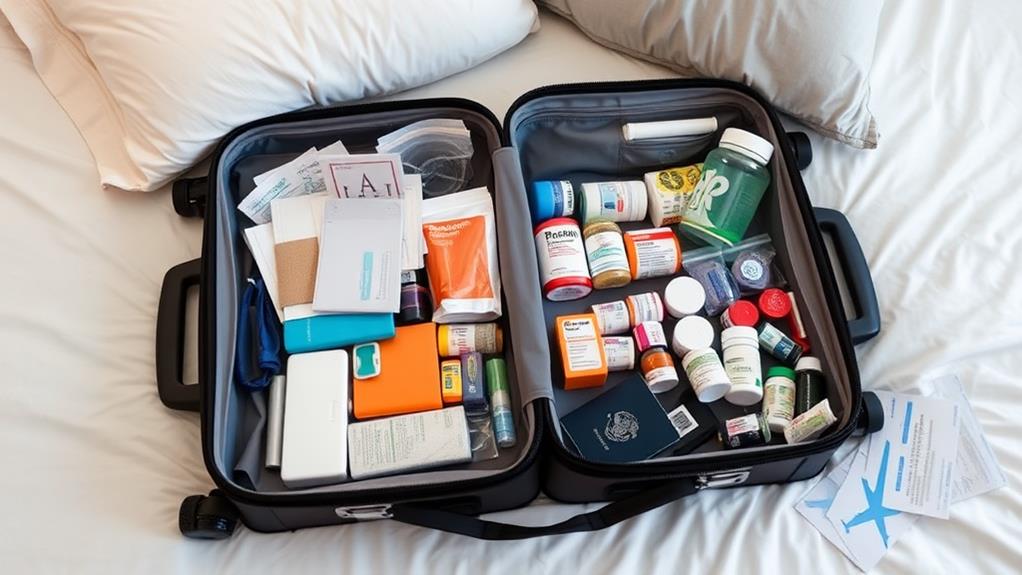
When preparing for your travels, don’t forget to pack a well-stocked first aid kit with essential wound care supplies.
From adhesive bandages and antiseptic wipes to gauze and antibiotic ointment, these items can be lifesavers for minor injuries on the road.
Remember to include emergency medical tools like tweezers and scissors, as well as basic comfort items such as instant cold packs and a thermometer, to guarantee you’re ready for whatever adventure throws your way.
Recommended Products

THE PERFECT FIRST RESPONSE BAG| Be Fully Stocked & Ready to Go in Case of Emergency! | High-Performance, HSA/FSA Approved Trauma & Bleeding Backpack Kit Includes Everything Professionals Need to Protect & Serve with Confidence including CAT Tourniquet, QuikClot 4x4 Dressing, HyFin Vent Chest Seal, Israeli Bandage & Oxygen Tank | Perfect for EMT, EMS, Fire, Police, Paramedics & Other Servicepeople | Extra Large Model Measures 22” x 14” x 8”

Coast Guard Approved First Aid Kit: Coast Guard Approval #160.041/23/0 ensures this marine first aid kit meets rigorous maritime safety standards

Pro Series Design: Equipped with hospital-quality tools, this professional first aid kit ensures preparedness for backcountry emergencies
Wound Care Supplies
Properly equipped travelers invariably include wound care supplies in their first aid kit. When you’re out exploring the world, you never know when a minor mishap might occur. That’s why it’s vital to pack these essential items in your carry-on:
- Assorted adhesive bandages for those pesky cuts and scrapes
- Gauze pads and adhesive tape to handle larger wounds
- Antiseptic wipes to keep infections at bay
- Antibiotic ointment for promoting healing
Don’t forget to toss in a pair of tweezers too! They’re a lifesaver for removing splinters or other unwanted souvenirs from your adventures.
With these supplies on hand, you’ll be ready to tackle any minor injuries that come your way. Remember, freedom means being prepared for anything – so stock up and hit the road with confidence!
Emergency Medical Tools
Beyond wound care supplies, an all-encompassing travel first aid kit should include several emergency medical tools.
When deciding on medications to bring, don’t forget these essential gadgets that can be lifesavers on the road. Tweezers are your best friend for extracting pesky splinters or ticks, while rounded-tip scissors come in handy for cutting tape or gauze. Trust me, you’ll be glad you packed them!
Instant cold packs are a godsend for bumps, bruises, and burns – they’re like having a portable ice pack without the mess.
And let’s not forget the trusty non-mercury thermometer. It’s vital for keeping tabs on fevers when you’re far from home.
Basic Comfort Items
The cornerstone of any travel first aid kit is a collection of basic comfort items that address common health concerns.
When you’re on the road, far from home, you’ll need these essentials to handle minor mishaps and keep your adventure rolling. It’s a good idea to pack:
- Adhesive bandages in various sizes for those pesky cuts and scrapes
- Antiseptic wipes to zap germs and keep infections at bay
- Gauze and tape for bigger boo-boos that need extra TLC
- Tweezers for extracting splinters or ticks (because freedom sometimes comes with uninvited guests)
Don’t forget a thermometer – it’s your personal health detective when you’re feeling off.
With these comfort items in your kit, you’ll be ready to tackle whatever curveballs your journey throws your way. Stay prepared, stay free, and keep exploring!
Topical Treatments
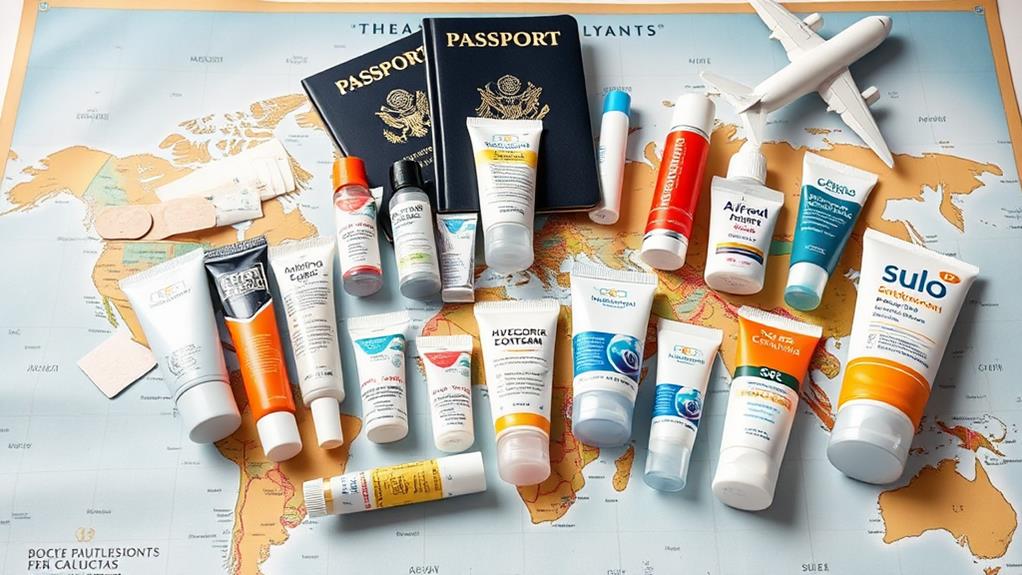
Topical treatments are essential components of any traveler’s medical kit.
Whether you’re hiking through bug-infested jungles or lounging on sun-soaked beaches, you’ll want to be prepared for whatever your adventure throws at you.
Pack a small tube of hydrocortisone cream to soothe those pesky insect bites and unexpected rashes.
Don’t forget the antiseptic ointment – it’s a lifesaver for those inevitable scrapes and cuts you’ll collect along the way.
Aloe vera gel is your skin’s best friend after a day of too much sun, while antifungal cream can rescue you from the dreaded athlete’s foot.
And for those minor skin infections that seem to pop up at the worst times? Bacitracin’s got your back.
With these topical treatments in your bag, you’ll be ready to face any skin-related challenge your journey brings.
Sleep Aids
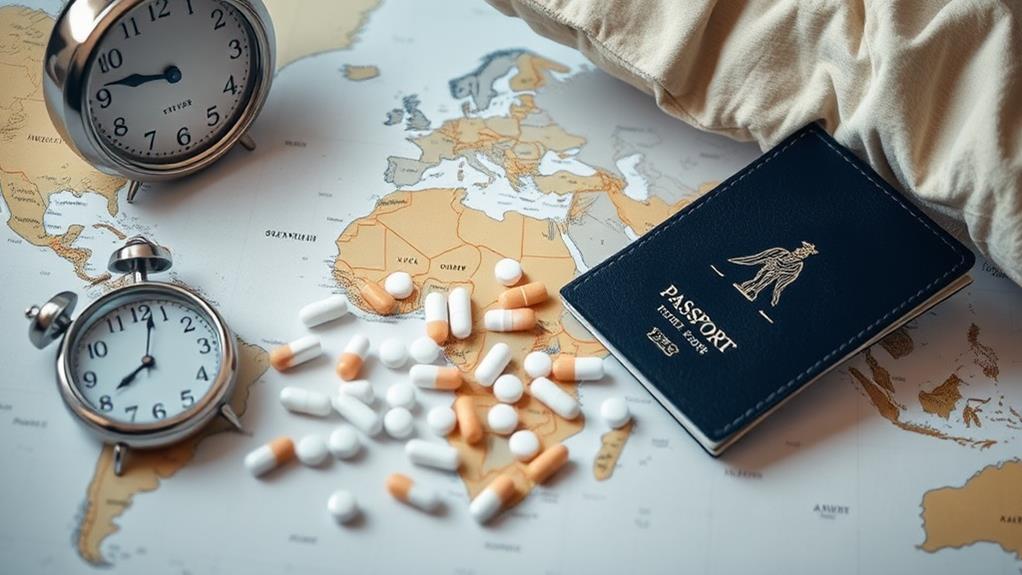
Catching up on sleep while traveling can be a challenge, but the right sleep aids can make a world of difference.
Whether you’re battling jet lag or struggling with unfamiliar surroundings, packing some trusty sleep aids in your carry-on bags can be a game-changer.
Here are four reasons why sleep aids are a traveler’s best friend:
- They help you conquer time zones like a boss
- You’ll wake up refreshed, ready to explore new horizons
- They turn any hotel bed into your personal cloud of comfort
- You’ll avoid being that grumpy traveler everyone avoids
From over-the-counter options like diphenhydramine to natural supplements like melatonin, there’s a sleep aid for every adventurer.
Just remember to test them out before your trip and pack them in their original packaging.
With the right sleep aids, you’ll be free to dream big and wake up ready to seize the day, no matter where your wanderlust takes you.
Altitude Sickness Medications
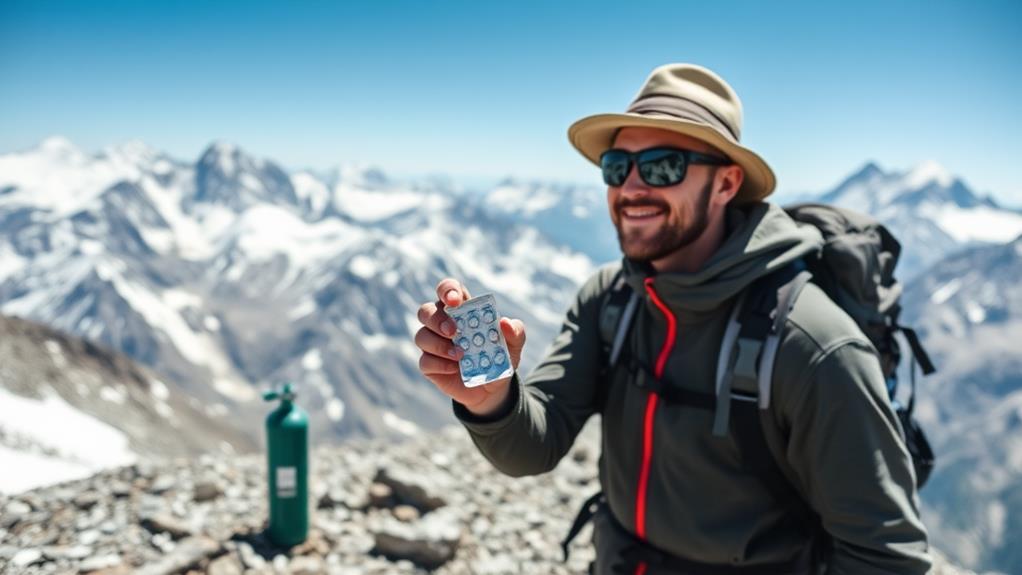
Some travelers venturing to high-altitude destinations may require medications to combat altitude sickness. If you’re planning a trip to the mountains, don’t let altitude sickness ruin your adventure!
Acetazolamide, or Diamox, is your best friend when it comes to preventing those nasty headaches and nausea that can hit you above 8,000 feet. Start popping these pills a day or two before you ascend, and make sure you’ve got enough medicine to last your entire trip.
Ibuprofen and anti-nausea meds like ondansetron are great backups to have on hand, too. Remember, the key to conquering those peaks is taking it slow – no more than 1,000 feet a day once you’re above 10,000 feet.
And hey, stay hydrated and skip the booze. Your body will thank you when you’re breathing easy at the summit!
Antimalarial Drugs
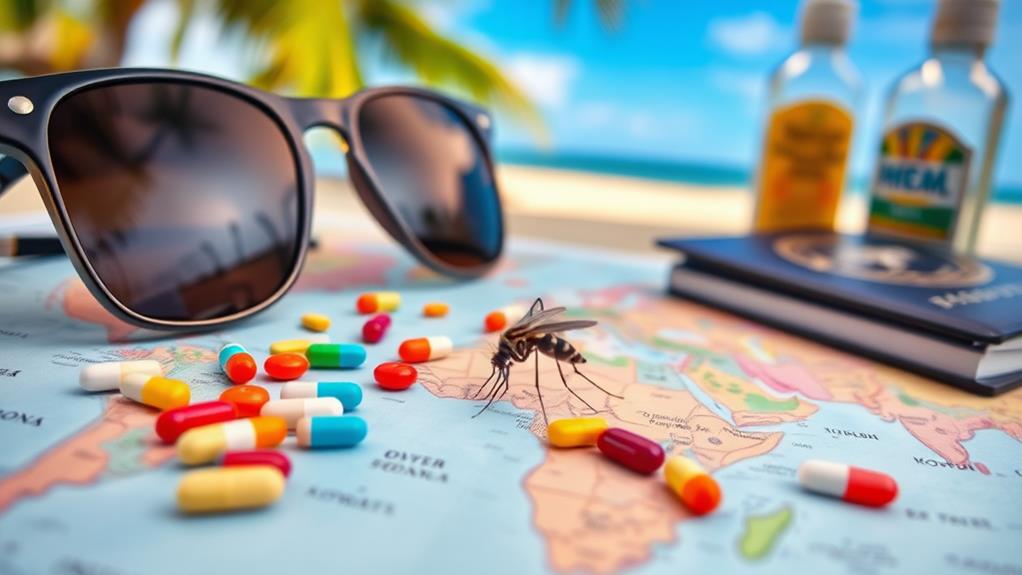
While altitude sickness can be a concern for mountain travelers, those venturing to tropical regions face a different health risk: malaria. Antimalarial drugs are an essential part of your travel arsenal, offering freedom to explore without fear.
But choosing the right medication isn’t a one-size-fits-all deal. Your healthcare provider can help you pick the perfect antimalarial drugs for your trip, considering:
- Your destination’s specific malaria risk
- Your personal health history
- The length of your adventure
- Any potential side effects that might cramp your style
Frequently Asked Questions
What Medication Should You Take When Traveling?
When starting your journey, prioritize travel health by packing essential medications. Include pain relievers, antihistamines, and digestive aids. Guarantee medication safety by carrying prescriptions in original packaging. Don’t forget sunscreen and insect repellent for outdoor adventures.
Do Prescription Pills Have to Be in Original Containers When Flying?
Wondering about travel regulations for your meds? While not strictly required by TSA, keeping prescription pills in original containers can streamline medication security checks. It’s a smart move for hassle-free travel and maintaining your freedom of movement.
How Should I Pack My Medications for a Flight?
For ideal medication organization during air travel, pack original containers in your carry-on. Include a 30-day supply, essential over-the-counter items, and a travel health kit. Keep liquids accessible for screening. Prioritize freedom by researching destination regulations beforehand.
Will TSA Check My Pills?
Like a hawk scanning its prey, TSA regulations allow for thorough screening of medications. Pill storage is subject to inspection, but you have the liberty to request a visual check instead of X-ray scanning for your personal freedom.
Conclusion
Packing the right medications for travel is like assembling a medical Swiss Army knife – versatile and prepared for any situation. From pain relievers to prescription meds, a well-stocked travel kit guarantees peace of mind on any journey. Remember to take into account destination-specific needs, like altitude sickness pills for mountain treks or antimalarial drugs for tropical getaways. With careful planning and the right meds in tow, travelers can focus on adventure, knowing they’re ready to tackle any health hiccup that might arise.

 By
By