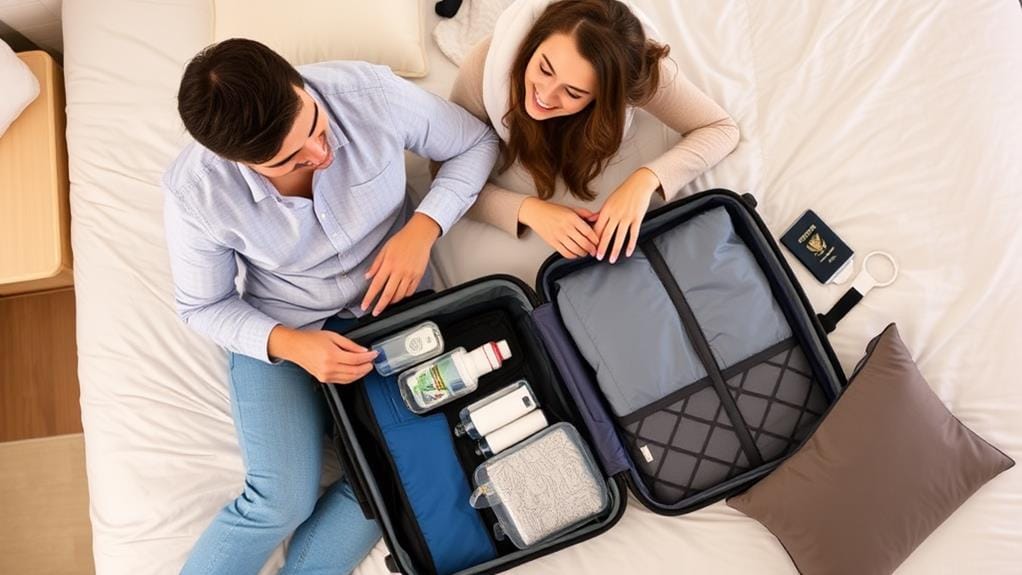

Traveling as a couple opens up some savings that solo travelers don’t get: splitting a room, sharing meals to try more of the local food, pooling credit card rewards. I’ve watched this play out for plenty of couples over the years, and none of it requires much extra effort — a lot of it makes the trip better too, not just cheaper.
Cost-Sharing Strategies for Couples
Splitting accommodation costs is the most obvious win — a room that would feel like a stretch solo becomes very reasonable split two ways, and sometimes that means you can afford a nicer place than you’d otherwise book. Sharing meals lets you try more dishes off a menu without doubling the bill, which turns dinner into more of an experience than it would be eating alone, and it’s one of my favorite things to recommend to couples who are still deciding what to order.
If you both use credit cards for everyday spending, coordinating which card earns rewards on which category of purchase can add up over a year, though this only makes sense if you’re paying balances off in full each month. And if your schedules allow it, traveling during off-peak periods saves on both of you at once rather than just one traveler’s share.
Maximizing Credit Card Rewards

Two people earning rewards instead of one adds up faster, especially around sign-up bonuses on new cards, which often require hitting a minimum spend that’s easier to reach with two incomes’ worth of expenses. It helps to think through which of you should hold which card based on your regular spending categories — groceries, dining, travel — so you’re not leaving value on the table.
Some programs allow transferring or pooling rewards between accounts, which is worth checking since it means you’re not stuck with two half-useful balances instead of one that gets you somewhere. As with any credit card strategy, this only pays off if you’re not carrying a balance and paying interest, which would erase any rewards earned — and I’ve seen that math go badly wrong for people chasing a free flight that ends up costing more in interest than the ticket was worth.
Off-Peak Travel Advantages

Traveling during quieter seasons tends to mean noticeably lower prices on flights and hotels, along with smaller crowds at popular sights. It’s a good fit for couples who’d rather have a relaxed, less rushed experience than hit every big attraction during peak crowds.
Airlines and hotels sometimes offer better rates or occasional upgrades during slower periods too, simply because they’re trying to fill rooms and seats. If you’re packing for an off-peak trip, keep in mind weather can be milder or more variable depending on the season, so check the local forecast rather than assuming it matches peak-season expectations.
Flexible Booking Techniques

Using a flight comparison tool with flexible date settings often turns up meaningfully cheaper options just a day or two off your original plan. It’s worth playing with those date-range tools before locking in a specific day, especially if your schedule has any give.
Off-peak timing, as mentioned, tends to combine well with this kind of flexibility — you get both a cheaper fare and a quieter destination. Last-minute deals can occasionally turn up too, though they’re less predictable and work best if you’re comfortable with some spontaneity. If you already hold travel rewards credit cards, it’s worth checking what a points redemption would cost versus paying cash before booking either way.
Local Transport and Accommodation Hacks

Local buses and trains are almost always cheaper than taxis and tend to give a better sense of a city’s rhythm than a car window does — I’ve had more good conversations on a public bus than I ever have in the back of a taxi. For accommodation, boutique hotels and short-term rentals sometimes offer better value and more local character than big chain hotels, particularly if you book outside peak season.
A few reasons this combination works well for couples:
- You get more chances to interact with locals and stumble on things a guidebook wouldn’t mention
- Money saved on transport and lodging stretches the rest of your budget further
- You end up with a different kind of trip than a typical tourist itinerary
Culinary Adventures on a Budget

Local Food Tours
A local food tour is a good way to sample a variety of dishes in one outing rather than committing to a single restaurant, and it usually comes with some background on the food and the neighborhood from a guide who actually lives there. It ends up being both a meal and a bit of a history lesson.
These tours also tend to be reasonably priced compared to eating at several restaurants separately, and they’re a nice way to spend an afternoon together without a rigid itinerary.
Cooking Classes Together
A cooking class is a step further into the local food scene — you’re not just eating, you’re learning to make something you can recreate at home. It’s usually cheaper than a nice dinner out, and you get to eat what you make afterward.
Beyond the food itself, these classes are a good way to pick up a bit of local history and technique, and they tend to be a memorable, hands-on activity to do together rather than just another meal.
Free and Low-Cost Activities

A picnic in a local park costs almost nothing and gives you a relaxed afternoon without a ticket price. Free walking tours, tip-based, are a good way to learn a city’s history from someone who lives there, and community events or local festivals often turn into some of the more memorable moments of a trip.
A few ideas worth planning around:
- Check museum schedules for free admission days
- Pack a simple picnic and find a park or scenic spot
- Look into local sports or community events happening while you’re there
Hiking trails and beaches cost nothing to enjoy and often end up being the highlight of a trip regardless of budget.
Balancing Splurges With Savings

Sharing meals and traveling off-peak both free up some budget that you can put toward one or two bigger splurges — a nice dinner, a special activity, whatever matters most to the two of you. Combining credit card rewards, if you use them responsibly, can sometimes stretch to an upgrade you wouldn’t otherwise book.
Setting aside savings from the smaller day-to-day choices into a specific fund for a splurge activity is a simple way to make sure it actually happens rather than getting absorbed into the general trip budget.
Frequently Asked Questions
How Does Traveling Make You Unique?
Travel exposes you to different cultures and perspectives, which tends to shape how you see the world afterward. Shared trips with a partner also create memories and shorthand that become part of your relationship’s story.
Is It Healthy for Couples to Travel Separately?
It can be, depending on the couple. Some benefit from occasional solo trips that build independence and give each person something new to bring back to the relationship, while others prefer to travel together most of the time. There’s no universal right answer.
Does Traveling Help a Relationship?
For many couples, yes — shared experiences, problem-solving in unfamiliar situations, and time away from routine can strengthen communication and connection, though it depends on how well you travel together generally.
Why Travel as a Couple?
Shared experiences build memories that solo trips don’t, and navigating logistics and new situations together can build trust and communication in ways day-to-day routine doesn’t always allow for.

 By
By



 By
By